EUROZONE
Nesta seção poderá encontrar todas as emissões lançadas pelos países pertencentes à zona euro.Anualmente são lançadas séries de moedas em carteiras, moedas comemorativas de diversos valores faciais e emissões especiais em estojos delicadamente elaborados.

Subcategories
-
Germany
Germany, officially the Federal Republic of Germany, is a country in Central Europe. German officials and experts in numismatics chose three different designs for their euro coins. €1 and €2 coins: the traditional symbol of German sovereignty, the eagle, surrounded by the stars of Europe. 10, 20 and 50-cent coins: the Brandenburg Gate, a symbol of the division of Germany and its subsequent reunification. 1, 2 and 5-cent coins: the oak twig, reminiscent of that found on the former German pfennig coins.
-

Andorra
Andorra, officially the Principality of Andorra, is a sovereign landlocked nation on the Iberian Peninsula. It is the fifth-smallest state in Europe. Andorra lacked a currency of its own and used both the French franc and the Spanish peseta in banking transactions until 31 December 1999, when both currencies were replaced by the EU's single currency, the euro. Coins and notes of both the franc and the peseta remained legal tender in Andorra until 31 December 2002. Andorra negotiated to issue its own euro coins, beginning in early 2015.
-

Austria
Austria chose to produce a series of coins illustrating flowers, architecture and famous people from its history. The designs were chosen by a national panel and public opinion poll. Austrian artist Josef Kaiser created the designs. The 2€ coin bears a portrait of the pacifist Bertha von Suttner, a symbol of Austria's efforts over many decades to support peace. Depicted on the 1€ coin is Wolfgang Amadeus Mozart, the famous Austrian composer. 50 cent coin shows the secession building in Vienna, 20 cent coin features the Belvedere Palace, 10 cent coin depicts St. Stephen's Cathedral, one of the jewels of Viennese Gothic architecture. As part of a floral series, the 5 cent coin features alpine primroses, 2 cent coin features an edelweiss and 1 cent coin features a gentian.
-
Belgium
Belgium's euro coins were designed by Jan Alfons Keustermans, Director of the Municipal Academy of Fine Arts of Turnhout. There are three series of coins in circulation. All are valid.
The first series depicts King Albert II in the inner part of the coin, while the royal monogram - a capital "A" underneath a crown - among 12 stars. In 2008, Belgium slightly modified the design in order to comply with the European Commission's guidelines. The coins of the second series also show King Albert II, but the royal monogram and the year of issuance now appear in the inner part of the coin, as do the mint marks and the country code for Belgium, "BE". In 2014, Belgium introduced the third series of euro coins, which show King Philippe, his royal monogram "FP" and the country code for Belgium, "BE".
-

Cyprus
Cyprus, officially the Republic of Cyprus, is an island country in the eastern Mediterranean Sea. The pound, or lira, from the Latin libra via the Italian lira; was the currency of Cyprus, including the Sovereign Base Areas in Akrotiri and Dhekelia, from 1879 to 2007, when the Republic of Cyprus adopted the euro.
The €1 and €2 coins depict a cruciform idol from the Chalcolithic period (3000 BC). This characteristic example of the island's prehistoric art reflects Cyprus's place at the heart of civilisation and antiquity.
-
Croácia
Croatia is a European country located in the Balearic Islands. It joined the European Union on July 1, 2013. The country adopted the Euro in January 2023, thus replacing the national currency - Croatian kuna. Croatia has chosen four designs for their national sides of the euro coins, all featuring the distinctive Croatian chequerboard pattern in the background. All the coins also depict the 12 stars of the European flag.
-
Slovakia
Slovakia, officially the Slovak Republic, is a landlocked country in Central Europe. The Slovak koruna or Slovak crown was its currency from February 1993 to December 2008. Slovakia adopted the Euro on 1 January 2009.
The €1 and €2 coins depict a double cross on three hills, as featured in the national emblem of Slovakia. The 10, 20 and 50 cent coins show Bratislava castle and the national emblem of Slovakia. The 1, 2 and 5 cent coins feature the Tatra Mountains’ peak, Kriváň, a symbol of the sovereignty of the Slovak nation, and the national emblem of Slovakia.
-

Slovenia
Slovenia, officially the Republic of Slovenia, is a country in Central Europe. Slovenia was in the beginning of 2007 the first new member to introduce the euro as its currency, replacing the tolar. The 2€ coin shows the poet France Prešeren and the inscription "Shivé naj vsi naródi" (God’s blessing on all nations) − a line taken from his poem "Zdravljica" which is also used in the country’s national anthem.
-

Spain
Spain, officially the Kingdom of Spain, is a country located primarily on the Iberian Peninsula in Europe. The peseta was the currency of Spain between 1869 and 2002, when it was replaced by the euro. Spanish euro coins feature three distinct designs: the effigy of the former and current kings of Spain, the effigy of Miguel de Cervantes, and the facade of the Cathedral of Santiago de Compostela. Three series of coins are in circulation, all valid.
-

Estonia
The Government of Estonia adopted the euro on 1 January 2011.
The design for the national side of Estonia’s coins is the same for all denominations. It features a geographical image of Estonia and the word "Eesti", which means "Estonia".
-

Finland
Finland, officially the Republic of Finland, is a Nordic country in Northern Europe. Finland adopted the euro as the country's currency on 1 January 1999. The national currency markka (FIM) was withdrawn from circulation, and replaced by the euro (EUR) at the beginning of 2002.
Finland chose three designs based upon motifs similar to those used before on national coins. The motif on the 2€ comprises cloudberries and cloudberry flowers in a design by Raimo Heino. The artist Pertti Mäkinen created a motif depicting two flying swans for the 1€ coin. The design was taken from his competition entry for a coin to commemorate the 80th anniversary of the independence of Finland. 1, 2, 5, 10, 20 and 50-cent coins depicts the Finnish heraldic lion in a reproduction of a design by the sculptor Heikki Häiväoja.
-

France
France is a country with several islands and overseas territories on other continents. It is the largest country in the European Union by area and the third largest in Europe. France adopted the euro on January 1, 1999, replacing the French franc in early 2002. Each French coin denomination features a different design. There is one series of coins in circulation for the 1, 2 and 5 cent coins and two series for the €1, €2 and 10, 20, and 50 cent coins. All are valid as legal tender.
-
Greece
Greece, officially the Hellenic Republic, is located on the southern tip of the Balkan peninsula. The drachma was the official currency of modern Greece from 1832 until the launch of the euro in 2001.
The Minister for the National Economy and the Governor of the Bank of Greece chose the designs for their euro coins from a set of proposals presented by a national technical and artistic committee. The designer of the winning motifs was sculptor Georges Stamatopoulos, sponsored by the Bank of Greece. There is a separate design for each denomination. The 2€ coin depicts a scene from a mosaic in Sparta (third century AD), showing Europa being abducted by Zeus, who has taken the form of a bull. Europa is a figure from Greek mythology after whom Europe was named.
-
Ireland
Ireland is a sovereign state in Europe that occupies about five-sixths of the island of the same name. The country adopted the euro in 2002, thus replacing the Irish pound. The Government of Ireland decided on a single national design for all Irish coin denominations. They show the Celtic harp, a traditional symbol of Ireland, decorated with the year of issue and the inscription "Éire" − the Irish word for Ireland.
-

Italy
Italy is a unitary parliamentary republic located in south-central Europe. Rome, the Italian capital, was for centuries the political and religious center of Western civilization as the capital of the Roman Empire and the seat of the Holy See. In Italy, the designs for the euro coins were subjected to thorough examination by a national technical and artistic commission and then presented to the nation through the country's largest television channel, RAI UNO. A different design was selected for each coin, all based on masterpieces by famous Italian artists. The 2-euro coin features an effigy of Dante Alighieri, as depicted in a painting by Raphael on display in the Wing of Pope Julius II in the Vatican Palace.
-

Latvia
Latvia is a Northern European nation, one of the three Baltic republics. It adopted the euro currency in 2014, replacing the Latvian lats. The €2 coin features a Latvian folk maiden. This image was originally used on the silver 5 lats coin in 1929. The edge of the coin bears the inscription DIEVS * SVĒTĪ * LATVIJU (GOD BLESS LATVIA). The designer is Guntars Sietiņš.
-

Lithuania
Lithuania is one of the three Baltic republics and a member state of the European Union (EU). It became the 19th member of the Eurozone on January 1, 2015, replacing the litas currency with the euro. Lithuania’s euro coins show the coat of arms of the Republic of Lithuania, Vytis, the country of issuance "LIETUVA" and the year of issuance "2015". The coins also feature the 12 stars of the European flag. They were designed by the sculptor Antanas Žukauskas. Edge-lettering of the €2 coin: LAISVĖ * VIENYBĖ * GEROVĖ * (Freedom * Unity * Well-Being *)
-

Luxembourg
Luxembourg, officially the Grand Duchy of Luxembourg, is a small landlocked country in Western Europe. Its capital is one of the four institutional headquarters of the European Union. The national side of Luxembourg's euro coins was designed by Yvette Gastauer-Claire, following an agreement between the Grand Ducal Court and the Government of Luxembourg. All the Luxembourg coins bear the profile of His Royal Highness Grand Duke Henri. They also bear the year of issue and the word "Luxembourg" written in Luxembourgish ("Lëtzebuerg").
-

Malta
Malta is an island country located in Southern Europe. The euro was adopted as the country's official currency on January 1, 2008, replacing the then-official Maltese lira. The 1 and 2 euro coins feature the emblem of the Sovereign Order of Malta. During the Order's period of domination, between 1530 and 1798, the eight-pointed cross became the symbol of the island, and today it is often referred to as the "Maltese Cross."
-

Mónaco
The Principality of Monaco is a sovereign city-state located in southern France, founded in 1297 by the House of Grimaldi. It replaced the Monegasque franc with the euro in 2002. There are two series of coins in circulation. The first series depicts, on the €2 coin, HSH Prince Rainier III. A double portrait of HSH Prince Rainier III and HSH Hereditary Prince Albert appears on the €1 coin. The 10, 20 and 50-cent coins depict the Prince’s seal. The coat of arms of the Sovereign Princes of Monaco is shown on the 1, 2 and 5-cent coins. The second series shows, on the €2 and €1 coins, a portrait of HSH Prince Albert II. HSH Prince Albert’s monogram is depicted on the 10, 20 and 50-cent coins. The coat of arms of the Sovereign Princes of Monaco is the main feature of the design on the 1, 2 and 5-cent coins.
-
The Netherlands
The Netherlands is a constituent nation of the Kingdom of the Netherlands located in Western Europe. The Netherlands chose two designs by Bruno Ninaber van Eyben, showing Queen Beatrix, for the first series. There are two series of coins in circulation. Both are valid. The second series, introduced in 2014, shows King Willem-Alexander and bears the inscription "Willem-Alexander Koning der Nederlanden" (King of the Netherlands). €1 and €2 coins: First series: Queen Beatrix is shown with the inscription "Beatrix Koningin der Nederlanden" (Queen of the Netherlands). Second series: King Willem-Alexander is shown with the inscription "Willem-Alexander Koning der Nederlanden" (King of the Netherlands). The mint marks appear on either side of the year of issuance. Edge-lettering of the €2 coin, both series: GOD * ZIJ * MET * ONS * (God be with us).
-

Portugal
The current currency in Portugal is the Euro coin. The Portuguese escudo was the previous currency, replacing the real on 22 May 1911 and was in use until the introduction of the euro on 1 January 2002.
-
San Marino
San Marino's euro coins are different from each other. All coins feature the words "San Marino" and the 12 stars of the EU. The coins feature the Third Tower of Il Montale (€0.01), the Statue of Liberty (€0.02), the First Tower of La Guaita (€0.05), the Basilica of San Marino (€0.10), San Marino, inspired by a painting by the school of Guercino (€0.20), the Three Towers of La Guaita, La Cesta and Il Montale (€0.50), the national coat of arms (€1.00) and the Government Palace (€2.00).
-

Vatican
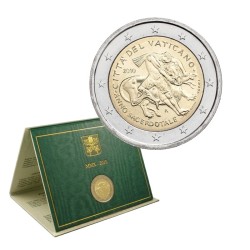
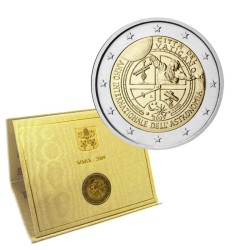
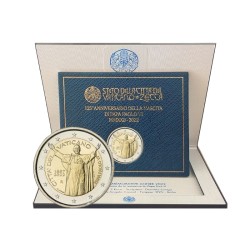
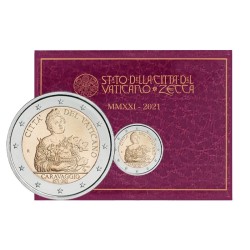
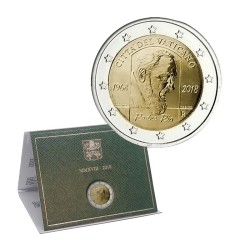
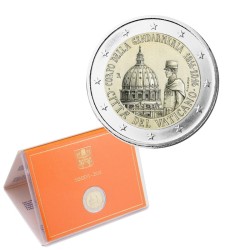
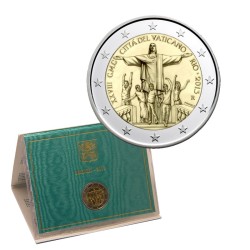
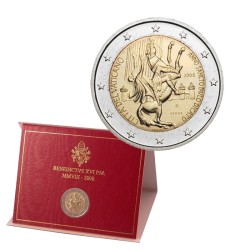
Vatican or Vatican City is a sovereign city-state and the seat of the Catholic Church. The Vatican Euro Coins are composed of four different series. The first series (2002-2005), presents the effigy of Pope João Paulo II. The second (2005), presents the emblem of the Apostolic Chamber, the arms of Cardinal Carmelengo, and the names "Sede Vacante MMV". The third series (2006-2014) presents the effigy of Pope Benedict XVI. All the models have the inscription "Vatican City" and the twelve stars of the European Union. The fourth series, used since 2014, presents the Effigy of Francis I.